
Case Studies
Explore case studies that demonstrate how school districts are planning and implementing clean energy projects. These in-depth examples highlight project goals and timelines, planning strategies, project costs, financing tools and funding sources, and impacts on energy use, operating budgets, and student health and learning.
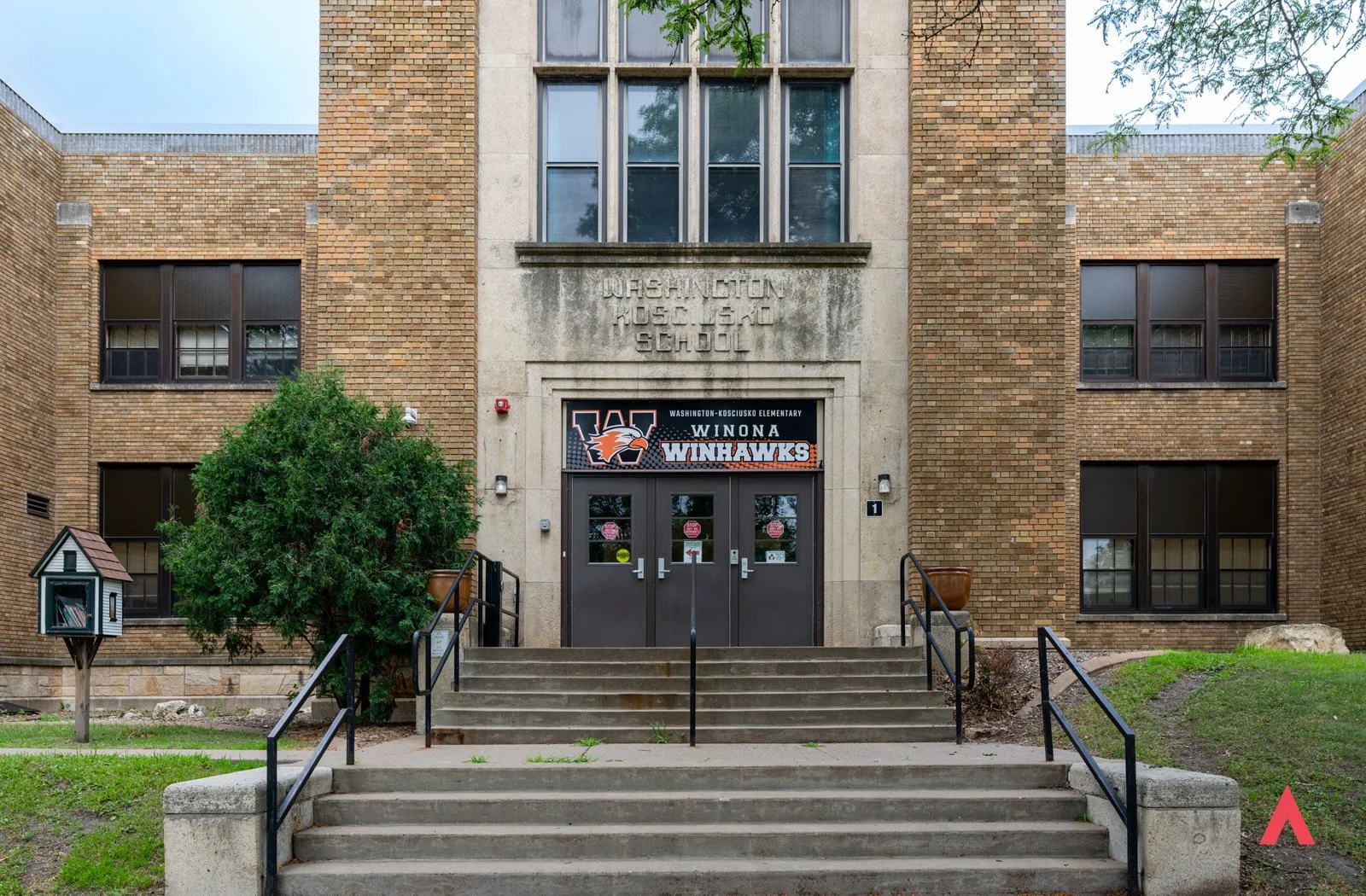
Healthy, Resilient Minnesota Schools: A Model for Modernizing Aging Buildings
Winona Area Public Schools’ Washington-Kosciusko and Jefferson Elementary were nearly 100 years old, with no air conditioning, poor ventilation, and classrooms that swung from too hot to too cold. Today, both buildings run on ground-source heat pumps, and the district recovered $5.5 million of the cost through energy tax credits and Elective Pay. Winona paired the state’s health and safety financing authority with the energy tax credits to make the upgrade affordable. This case study walks through the data behind the decision and the lessons other districts can use to do the same.

Ida Public Schools: Bringing Cooling to Classrooms and $3.6M Back to a Rural Community
When Ida Public Schools’ HVAC system—nearly 50 years old and with no air conditioning—started to fail, it wasn’t just an inconvenience. It was disrupting the school day. Classrooms were too hot in June and September, and the decades-old equipment was no longer reliable. Learn how district leaders worked with partners, staff, and families on a solution to replace the failing systems with ground-source heat pumps, adding air conditioning, and modernize the buildings—supporting local skilled trades jobs in the process—all without asking voters to approve new debt.
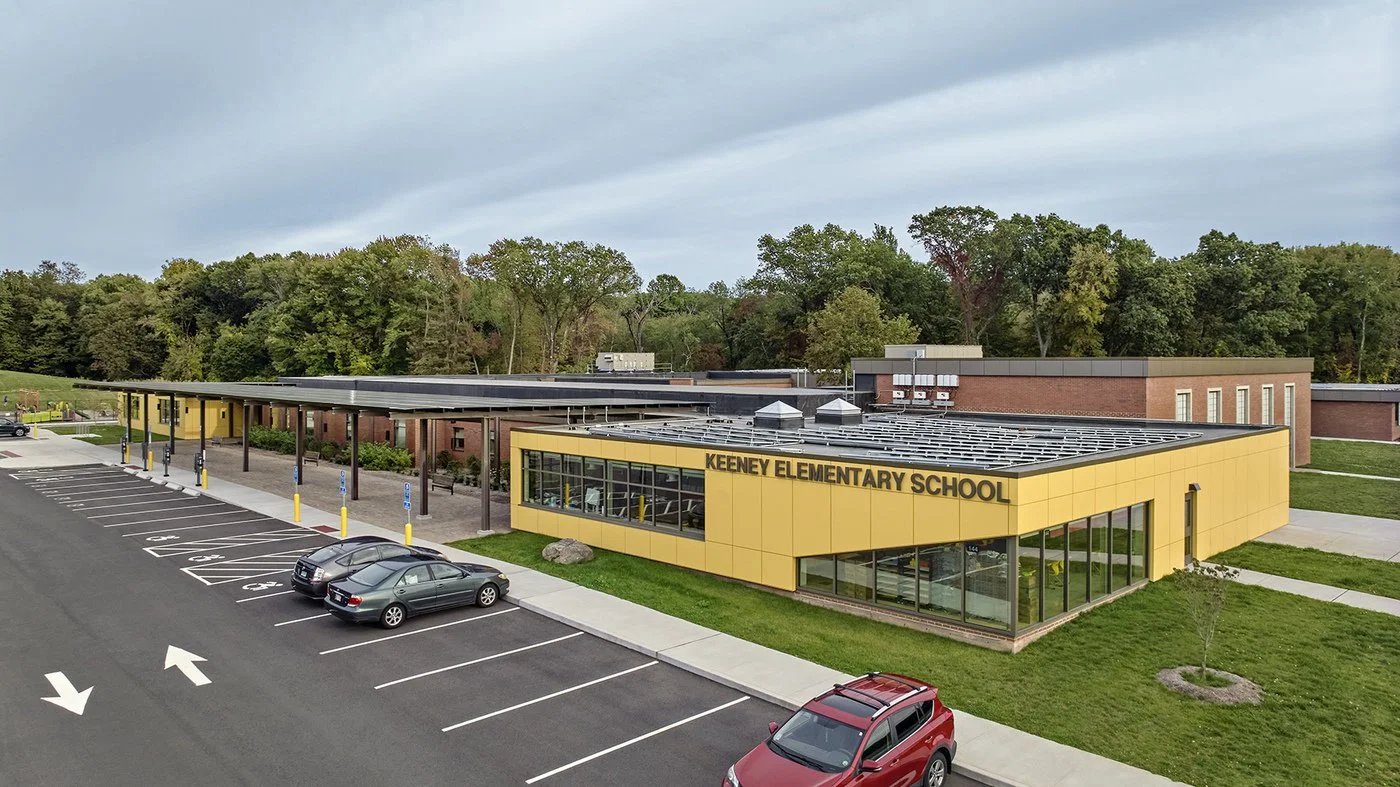
Reviving Keeney Elementary: Turning an Aging School into a Modern Learning Environment
Manchester Public Schools (CT) transformed Keeney Elementary—originally built in 1955—into a modern, high performance school that is healthier, more comfortable, and dramatically more efficient. The renovation eliminated fossil fuels, added cooling to all classrooms, and reduced utility costs—while keeping local taxpayer contributions to a minimum. By strategically layering grants, utility rebates, and federal energy tax credits, Manchester turned a decade-long vision into a practical, cost-effective model for renovating multiple schools.
Project Briefs
Explore project briefs that summarize how some school districts are counting on energy tax credits and Elective Pay to help lower the costs to modernize their school buildings. These one-page briefs provide a snapshot of project goals, funding strategies, and anticipated impacts on the students, schools, and communities.

California

Indiana

Iowa

Iowa

Kentucky

Kentucky

Kentucky

Maine

Maine

Minnesota

Nevada
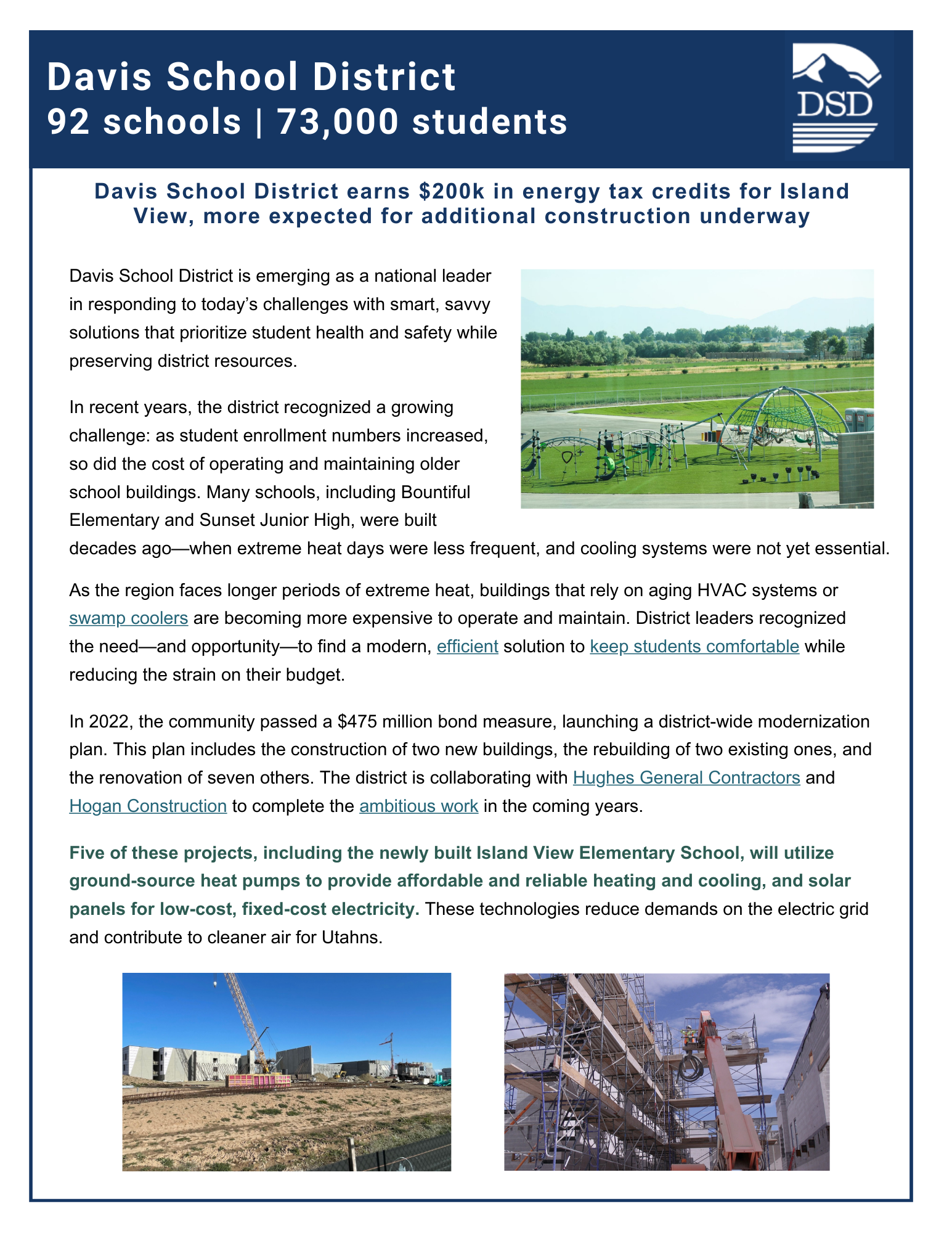
Utah