
Most of the schools our students will learn in for generations to come already exist – and many were built more than 50 years ago. That’s why retrofits matter so much. A school doesn’t need to be brand new to be healthy, safe, and resilient – it does need smart investments in modern infrastructure.
Schools across the Commonwealth are replacing aging HVAC systems and adding cooling with modern, efficient, and reliable ground-source heat pumps (GSHPs). These districts are proving it can be done.
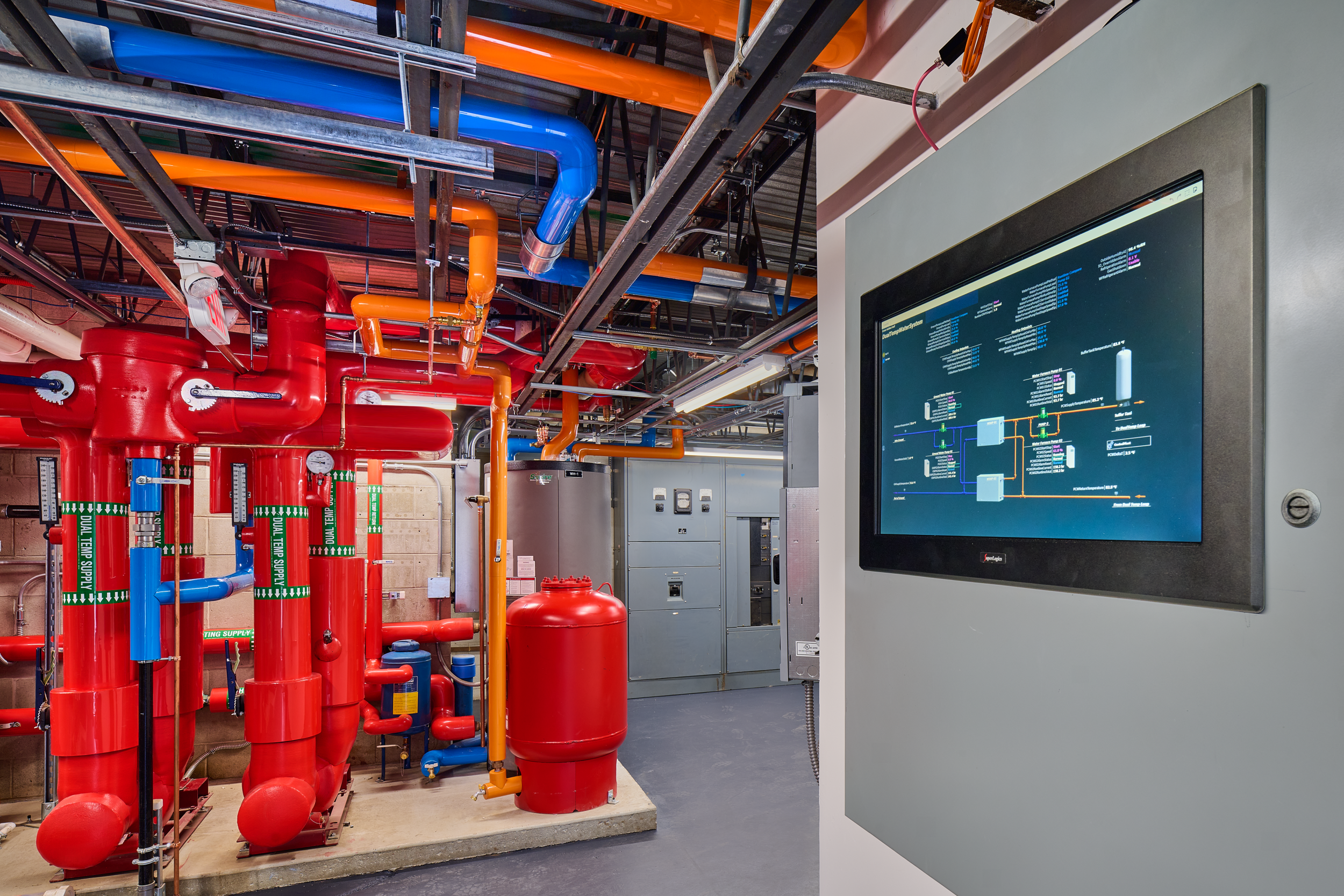
Essex Agricultural & Technical School earned ~$2M in federal energy tax credits, and expects $4M in savings over 20 years
Essex Tech replaced a 1972 steam boiler heating system with ground-source heat pumps through an energy savings performance contract (ESPC) with Energy Efficient Investments (EEI). More than half of the project costs were covered by federal energy tax credits, Mass Save incentives, and donor support. The new HVAC system is expected to save $4M in energy costs over 20 years, and now serves as a living laboratory for students to build career-ready skills in HVAC maintenance.
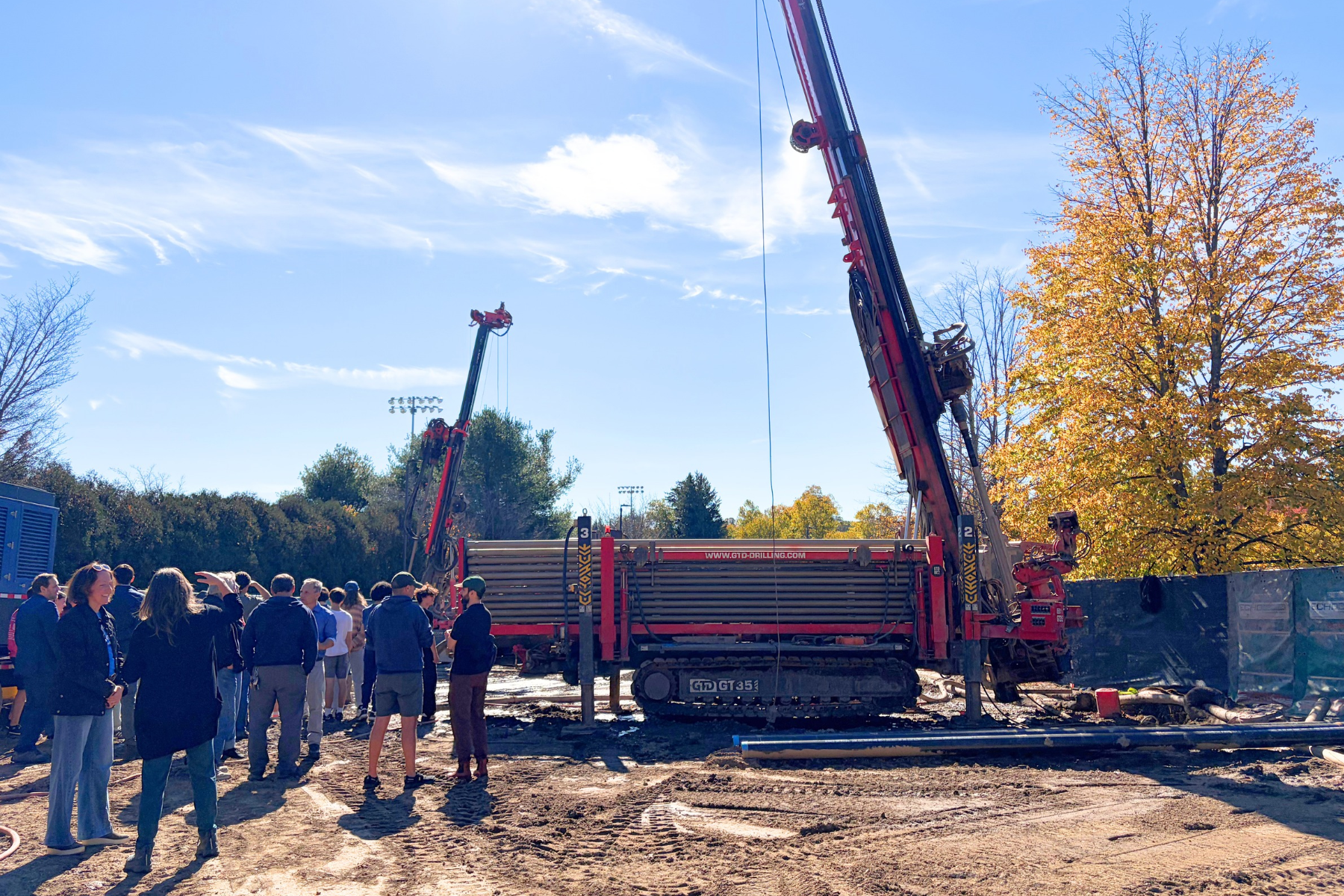
Northampton High School breaks ground on retrofit, backed by a 10-year energy savings guarantee
When Northampton High School’s aging boilers and chiller neared the end of their useful life, the City didn’t replace them with fossil fuel equipment. A feasibility study found that ground-source heat pumps were a viable option, and the City issued a request for qualifications (RFQ) before selecting Brightcore Energy to deliver the project through an ESPC.
The system is projected to cut the school’s energy use by 45% and is backed by a 10-year savings and system performance guarantee. The school was awarded a $4M grant from the Massachusetts Clean Energy Center’s (MassCEC) Green School Works program, and once complete, the GSHPs will be eligible for federal energy tax credits.
What can other districts learn from these examples?
Ground-source heat pumps are the most efficient heating and cooling option for schools, but not all vendors have experience with the technology. Firms without a track record of successfully retrofitting commercial buildings with geothermal heat pumps are unlikely to put the opportunity on the table. Connecting with experienced providers is key to success.
Districts can use performance contracting (M.G.L. c. 25A) to install ground-source heat pumps in existing buildings. This contracting methodology provides districts with a streamlined pathway to move projects forward. Both Essex and Northampton took this approach.
Performance guarantees can help communities feel confident moving ahead with installing ground-source heat pump technology.
Explore Resources on Funding and Financing
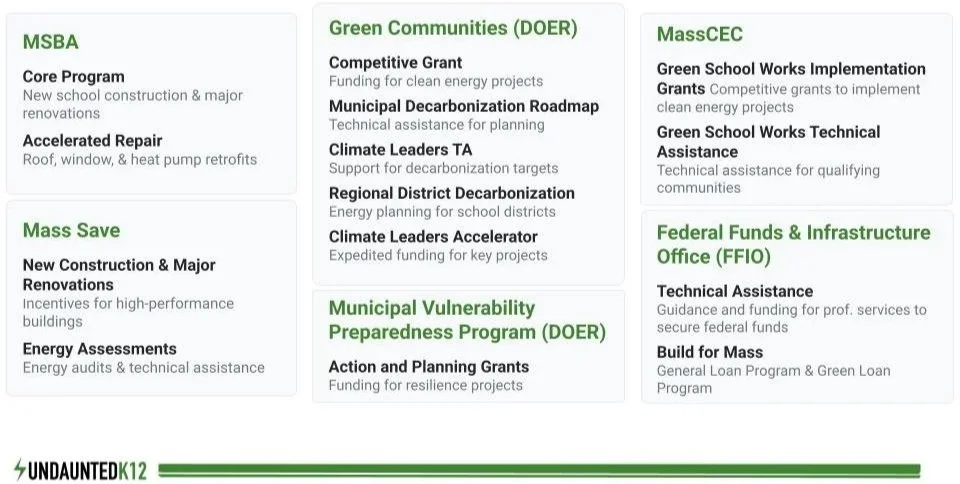
There are many state programs available to help schools plan and pay for modern, resilient learning environments. We put together a quick cheat sheet of the various funding resources available to schools for a recent presentation to the Building Electrification Accelerator (BEA). Our friends at BEA used this visual to create a one-pager. Use this one-pager to start a conversation with your district leadership about how various funding sources are available and can be stacked to get projects moving.
Resource Spotlight: Build for Mass, a new loan program for municipal infrastructure projects
MassDevelopment announced the opening of applications for Build for Mass, a new $75 million revolving loan fund that will help cities, towns, and private entities with a public purpose finance critical infrastructure, clean energy, climate resilience, and economic development projects. Build for Mass provides flexible, low-interest financing that helps communities move projects forward faster while maximizing available federal funding opportunities.
Federal tax credits arrive as a reimbursement once projects are complete. The Green Loan Program provides the capital you need today to get shovels in the ground. Learn more about the tax credit process here. For additional information, contact the Green Finance team at build4ma@massdevelopment.com.
