
Strengthening state ecosystems to advance healthy, resilient schools
School leaders shouldn’t have to figure out how to build healthy, resilient learning environments on their own.
The most successful school infrastructure projects rarely happen because of one champion. They happen when a whole ecosystem comes together – district leaders, state agencies, community partners, technical experts, and policymakers – working toward a shared goal.
That’s why we’re focused on building stronger state ecosystems that can help schools move from ideas to action – and from plans to projects. Continue reading to learn how we’re bringing these strategies to life in states across the country:
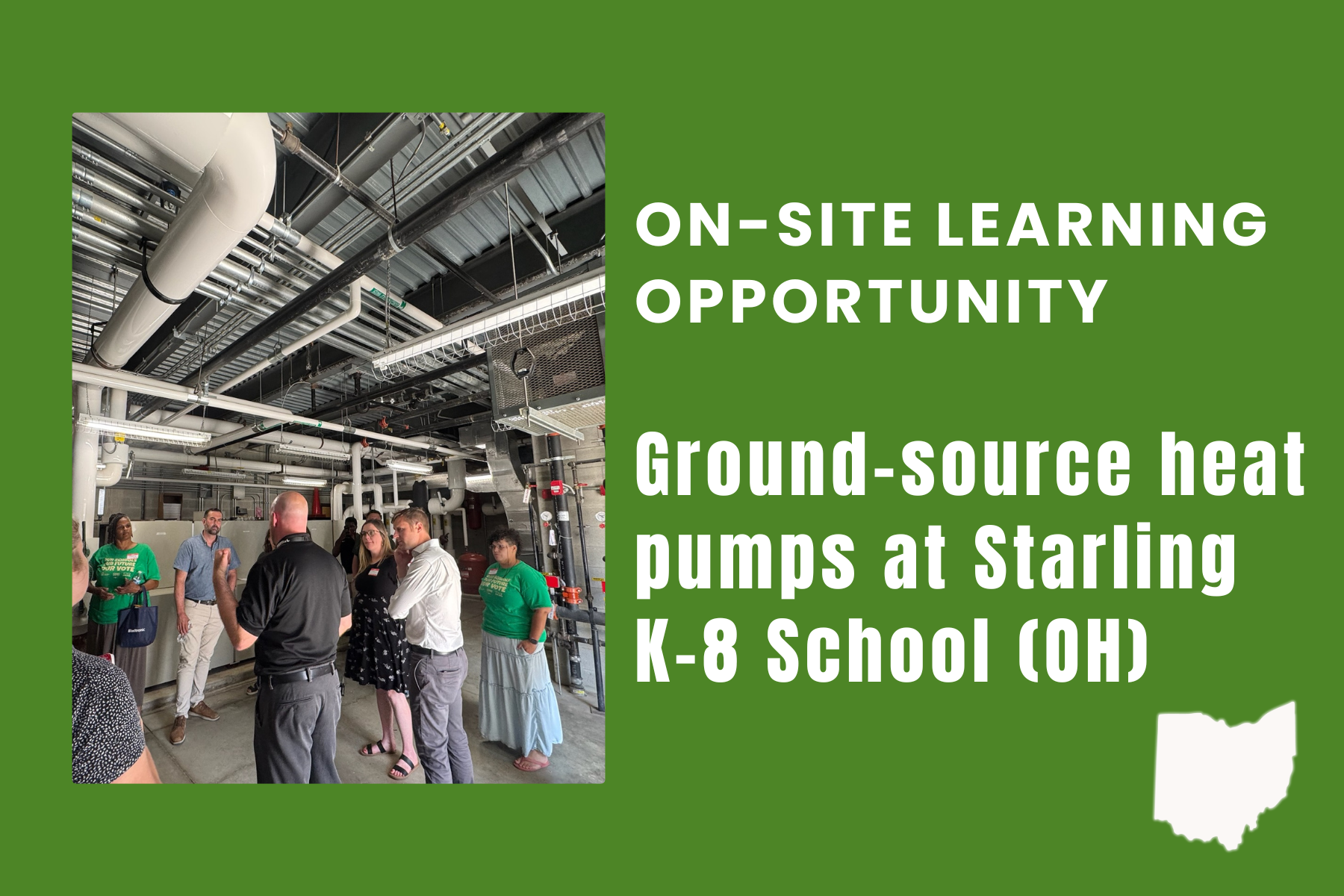
Peer learning opportunities build trust in new ideas
In Ohio, we partnered with Building Power Resource Center, the Ohio Organizing Collaborative, and Columbus City Schools to host a tour of Starling K–8 School, where community members learned about the health benefits and cost-savings of ground-source heat pumps that have been operating for nearly a decade.
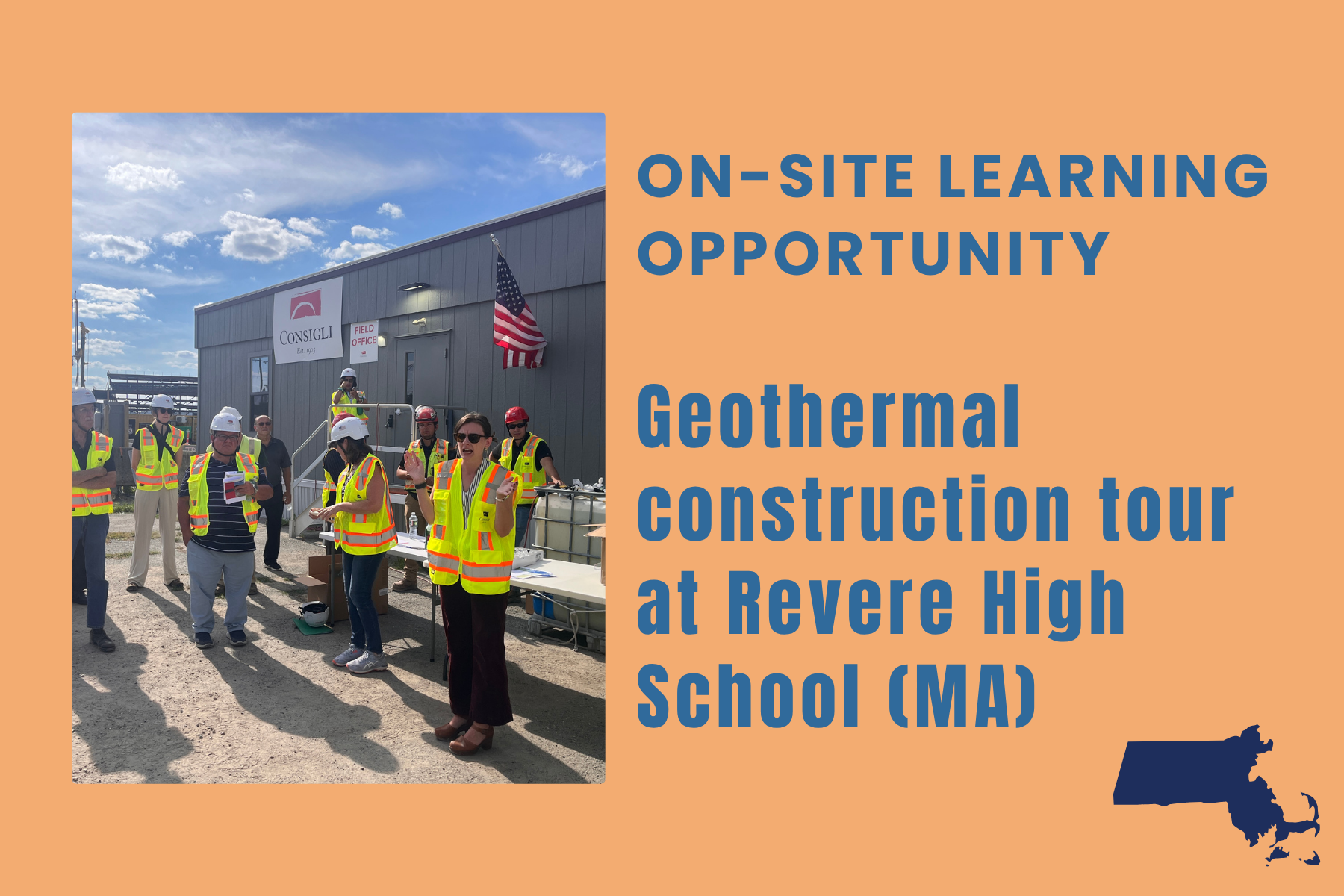
In Massachusetts, we partnered with Revere Public Schools and Leftfield Project Management to host a tour of the new Revere High School geothermal construction site. Peer learning opportunities help school decision-makers develop trust in how this modern HVAC technology can work in their communities.
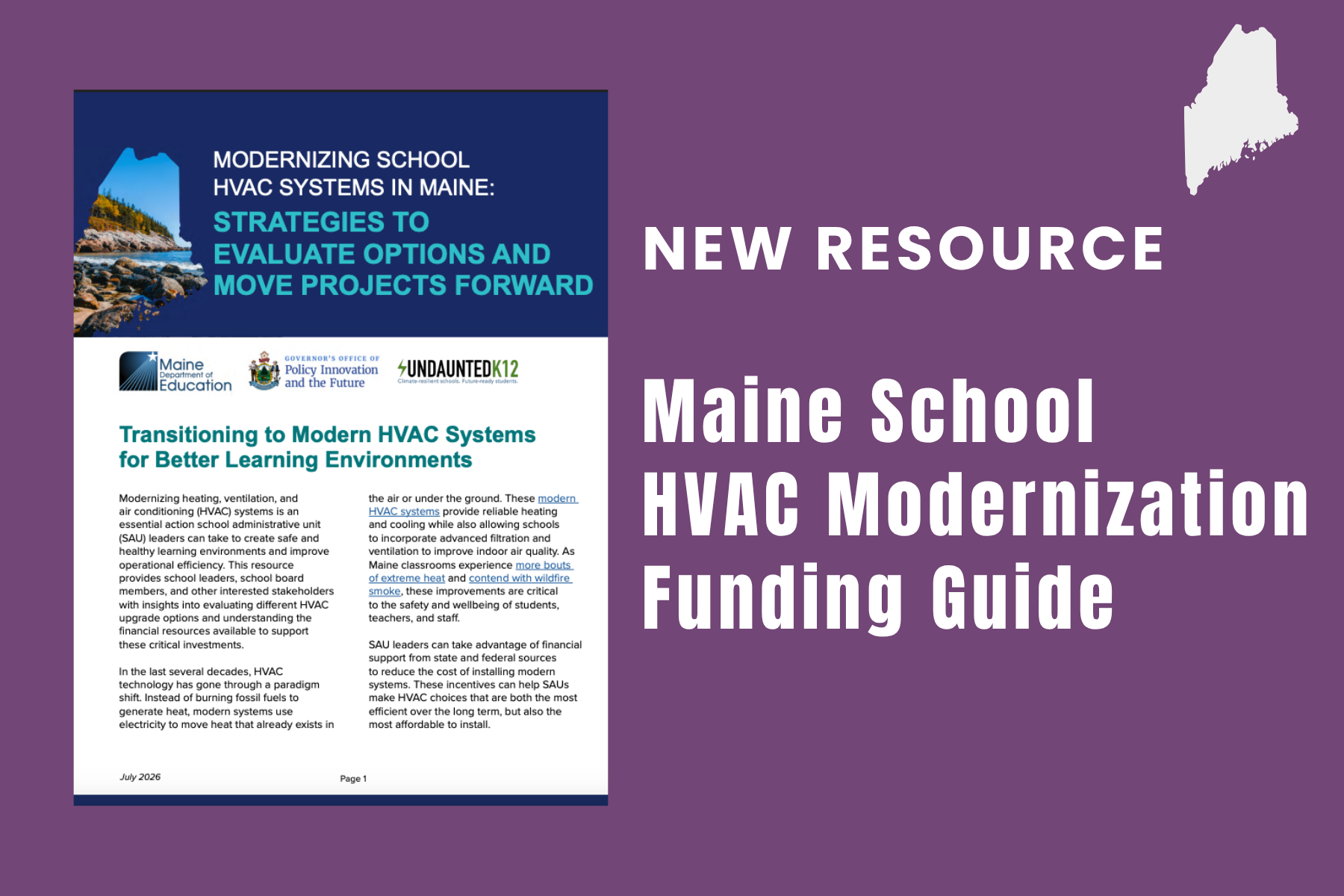
Raising awareness about funding and financing strategies through state agencies
Many school districts depend on state agencies for support and resources. In Maine, we partnered with the Department of Education and Governor’s Office of Policy Innovation and the Future to develop the School HVAC Modernization Funding Guide. The guide provides decision-makers with locally grounded project and cost examples, funding and financing options, and guidance for selecting and contracting with Energy Services Companies.
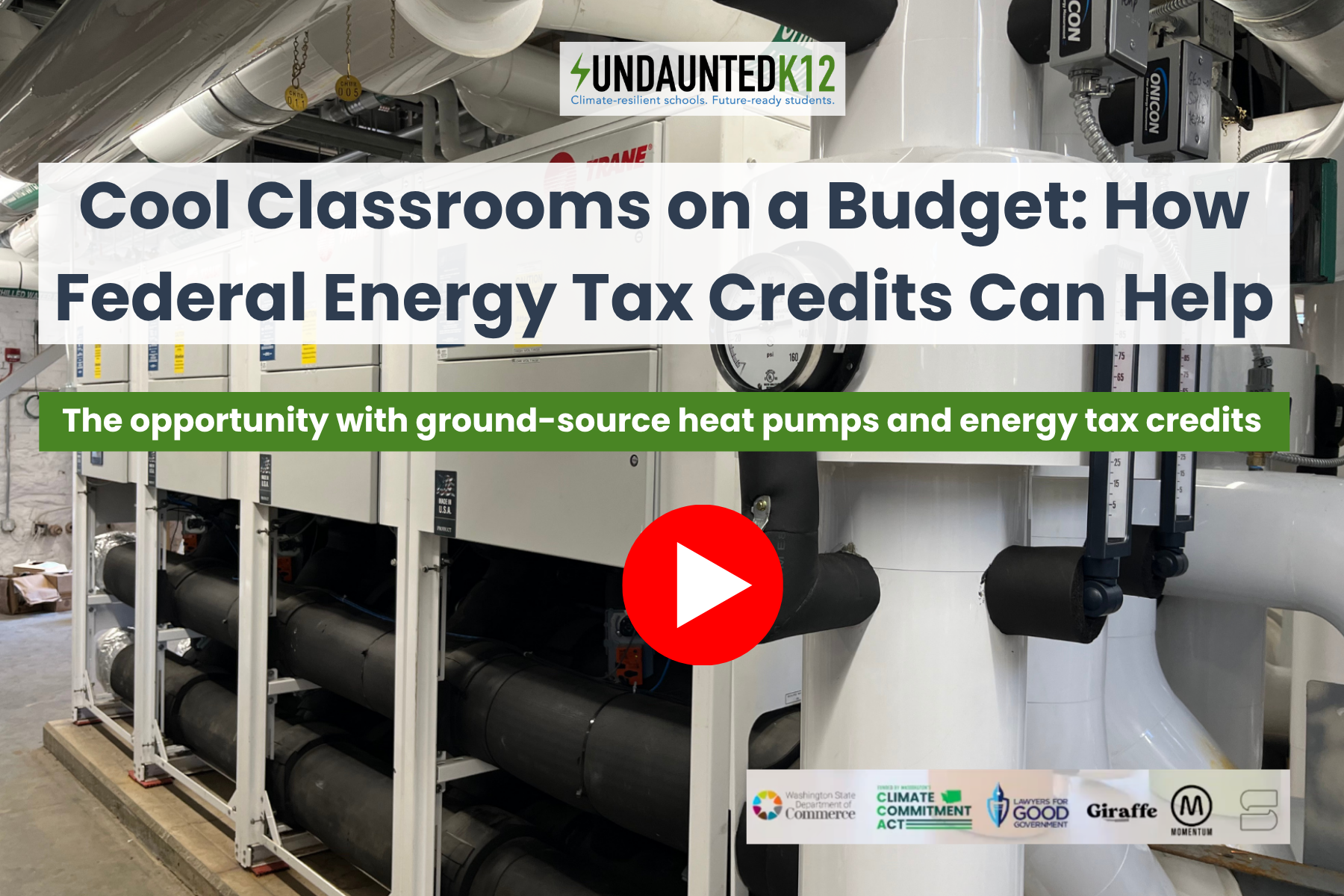
In Washington, we partnered with Lawyers for Good Government to support the Department of Commerce’s Clean Energy Tax Credit Assistance Program (CETCAP). Through awareness-building sessions and direct technical assistance, the program helps districts understand and access federal tax credits. State-led initiatives that raise awareness about funding and offer practical guidance help districts move from planning to implementation.
Sharing school examples, outcomes, and implementation lessons
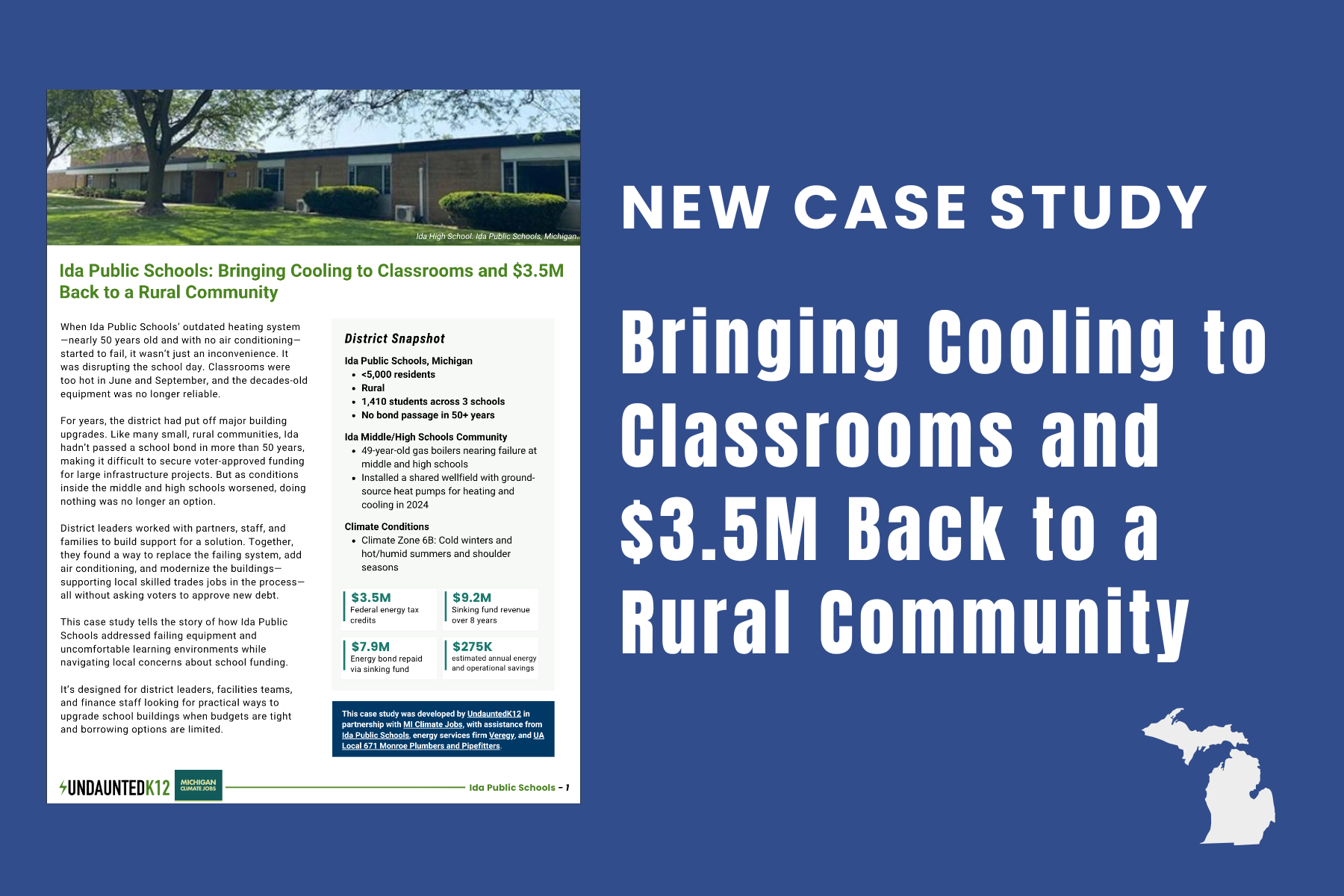
Successful projects can be models for other districts with similar contexts. Together with Ida Public Schools and Michigan Climate Jobs, we released a case study showing how a small, rural district in Michigan funded HVAC upgrades across two schools and earned $3.5M back in federal tax credits. Sharing the planning strategies, project decisions, and cost data behind successful projects gives communities confidence in advancing similar projects in their schools.
Strengthening relationships between leaders in states
We’re connecting the dots among leaders working to create healthy, safe, and resilient schools. Recently, Undaunted’s Kristen Hengtgen traveled to Superior, Wisconsin, for the Wisconsin Public Education Network's annual summit, where she connected with education leaders about how modern HVAC systems can improve student health, safety, and learning.
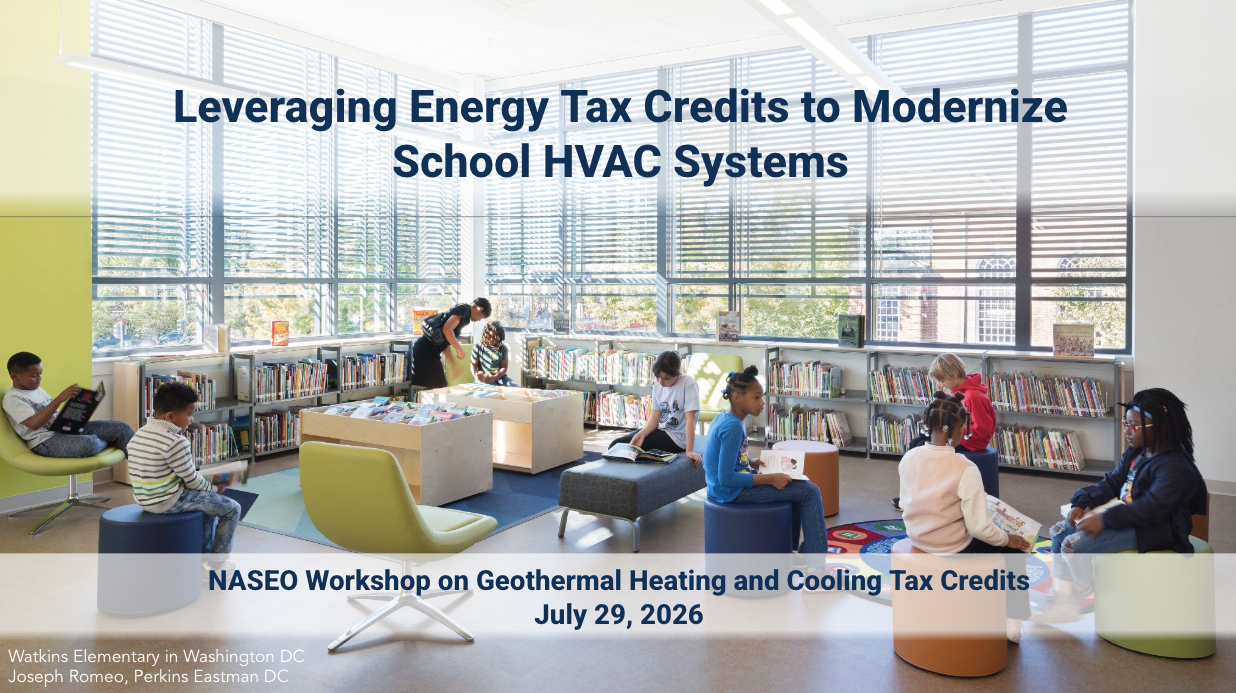
During the National Association of State Energy Officials (NASEO) National Buildings Summit, Sara Ross (Co-Founder) presented on the state of ground-source heat pump deployment in schools and the opportunity for state energy offices to drive more adoption. The presentation featured Colorado’s innovative Geothermal Energy Tax Credit Offering (GETCO) available to schools.
Creating these connections helps ensure that the individuals, agencies, and organizations best positioned to support schools understand the roles they can play and identify opportunities to help create healthy, modern learning environments for generations to come.
Explore other examples of these strategies and reach out to us if there are ways we can support efforts underway in your state.
