
Columbus City Schools is Saving Energy Dollars with Ground-Source Heat Pumps
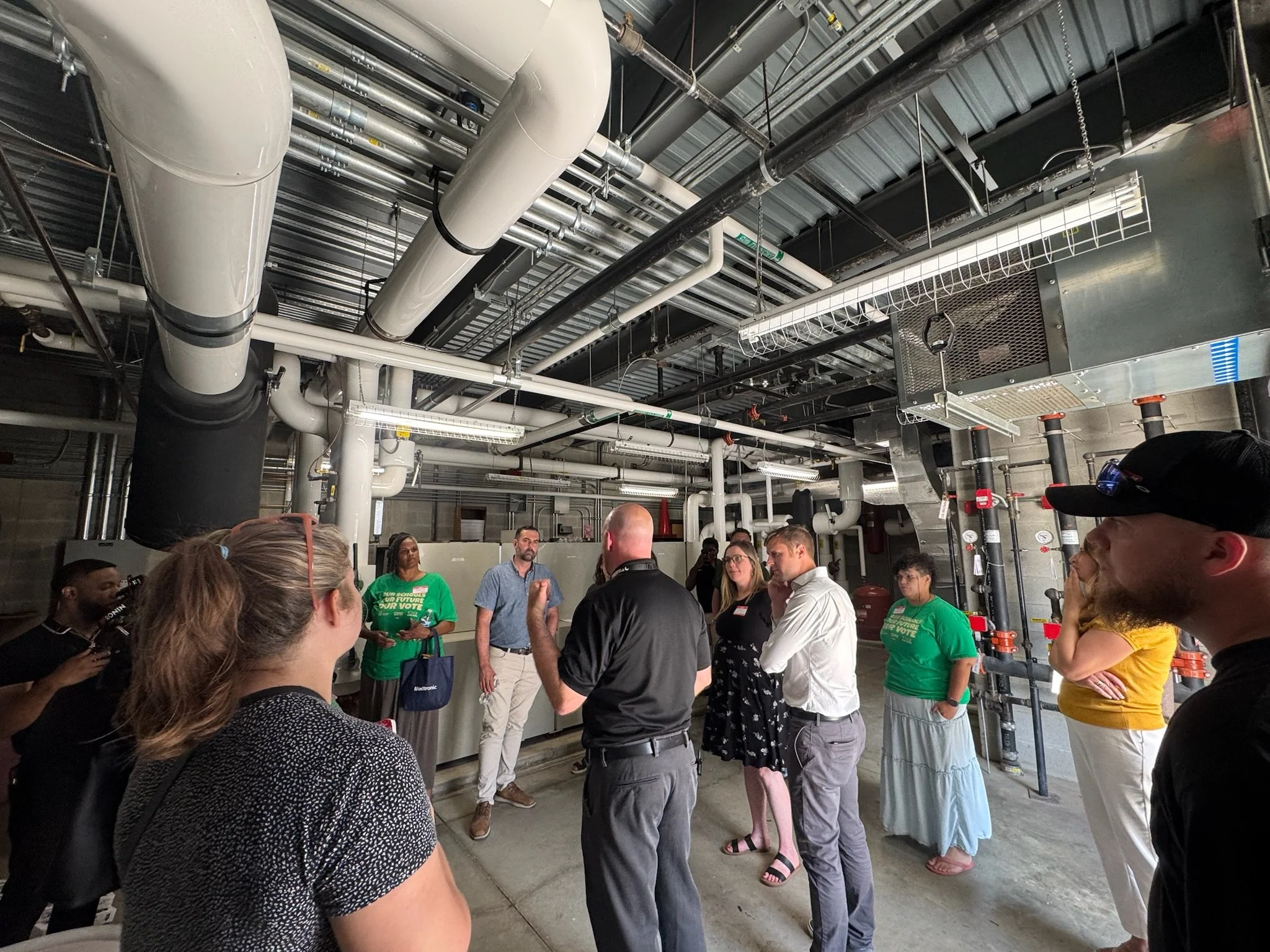
Jeff Roe, Jonathan Williams, Jerick Richter, and Mary Holmquist (Columbus City Schools) give a tour of ground-source heat pumps at Starling
K-8.
On August 3rd, Building Power Resource Center, Ohio Organizing Collaborative, and UndauntedK12 convened Ohio community leaders at Starling K-8 in Columbus to experience firsthand a ground-source heat pump system with more than a decade of operating experience.
Ground-source heat pumps — also known as geothermal— move heat from the ground into buildings for heating, and reverse the process to pull heat out of buildings for cooling. They offer schools an efficient, all-electric alternative to fossil-fuel HVAC systems, while reducing on-site combustion and improving air quality.
The Starling system was built in 2013 as one of six sister buildings across Columbus City Schools. The district has been running multiple geothermal heating and cooling systems for long enough to know what they take to maintain and operate — the kind of information district leaders need when they’re deciding whether this technology makes sense for their own schools.
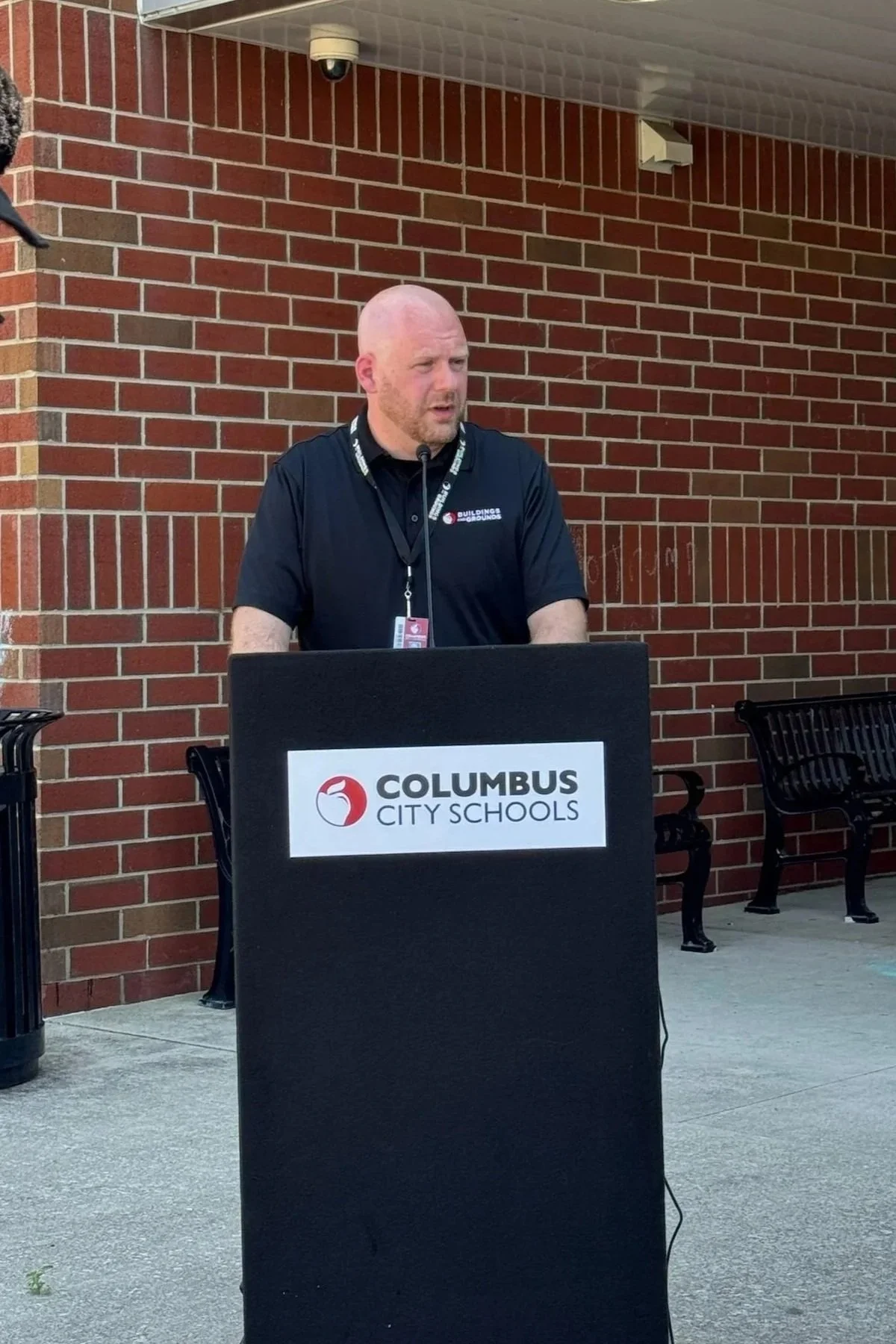
The tour wasn't a polished product demo. It was an exploration of a building with a decade of wear, led by staff who know what works and what they'd do differently. Jeff Roe, Director of Buildings and Grounds at Columbus City Schools (pictured left), walked the group through the mechanical room and shared examples of what facilities staff manage day-to-day. He was candid about choices he'd make differently today, but he also made clear why the technology has earned its place in Columbus, saying “Geothermal is not an experimental concept or an unverified theory for Columbus City Schools. It is a proven, battle-tested, top-ranked technology that is actively saving energy dollars, and keeping students comfortable today at Starling, and across its sister schools.”
Jeff highlighted three key advantages. First, energy performance. The six buildings use roughly half the energy of a typical Columbus City Schools building, placing them among the top 20 of the district’s 124 sites. That translates into dollars staying in the district rather than going to utility bills.
The second is maintenance. The individual classroom heat pumps work a lot like residential systems, so in-house staff can learn to service them without needing specialized contractors who can often be hard to find.
And third, reliability. Because the system pulls heat from 500 feet underground, where the temperature stays relatively constant, it avoids some of the challenges faced by outdoor air-source systems. The equipment does not freeze up or need to stop and defrost during cold weather.
For Ohio school districts considering a new school, major renovation, or an end-of-life HVAC replacement, Columbus offers an important local reference point. Six schools have provided more than a decade of experience with the technology, giving enough time to understand not just its benefits but its maintenance needs, operational realities, and long-term performance.
And today, districts have an additional reason to explore the opportunity. Through Elective Pay, schools and municipalities can receive federal tax credits for eligible ground-source heat pump projects as cash reimbursements, potentially covering up to 50% of project costs.
The combination of proven technology, real-world Ohio experience, and unprecedented federal support creates a compelling moment for districts to investigate how ground-source heat pumps might be a fit for their schools.
We’re grateful to Columbus City Schools for opening their doors and to the Ohio leaders who joined us. We hope more districts will take a close look at what Columbus has learned and consider how ground-source heat pumps can benefit their students, their budgets, and their communities.
